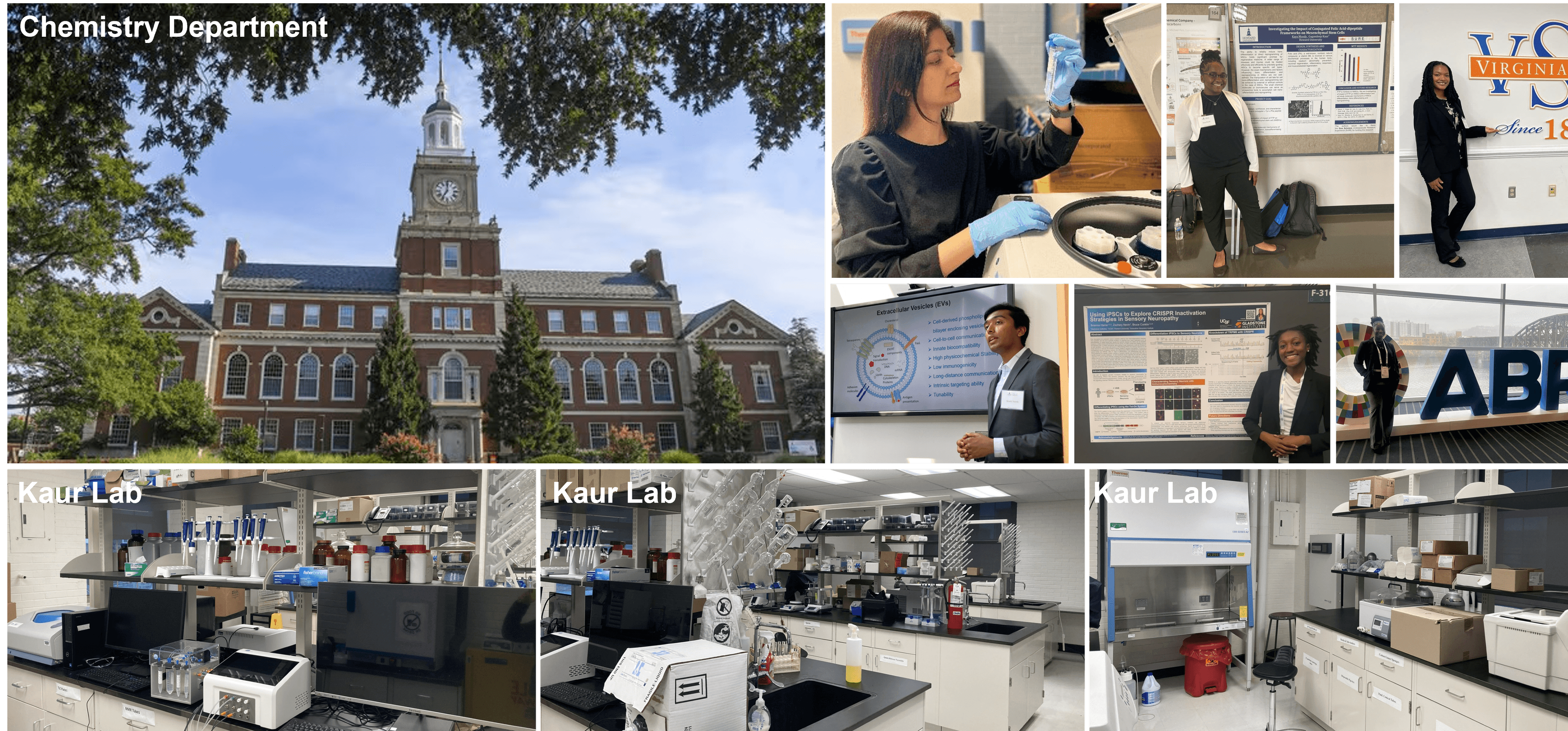
Kaur Lab
ADVANCING DISCOVERY AND FUTURE LEADERS
Our research is supported by grants that advance fundamental understanding of the complex interactions among biomaterials, stem cells, and the immune system, while engineering innovative solutions for autoimmune diseases, cancer, and regenerative medicine. Funding from competitive research grants supports the supplies, equipment, and personnel needed to carry out this work. It also enables us to train the next generation of scientists and engineers, providing students with the skills and opportunities to make lasting contributions to science and public health.
If you would like to support our mission, we invite you to schedule a lab tour or make a tax-deductible donation.
CURRENT FUNDING SOURCES
We are grateful for the support of the National Institutes of Health (NIH) and the National Science Foundation (NSF). Funding from these agencies enables our laboratory to advance research at the intersection of biomaterials, stem cells, and immunology, while supporting the training of future scientists and engineers.
CURRENT RESEARCH VISION AT HOWARD UNIVERSITY
The Kaur Lab is dedicated to advancing precision biomaterials and bioinspired technologies that address critical challenges in human health. Our research integrates biomaterials science, immunology, stem cell biology, extracellular vesicle engineering, and drug delivery to develop innovative solutions for the diagnosis, treatment, and prevention of complex diseases.
We seek to understand and engineer interactions between biomaterials, cells, and the immune system to create next-generation therapeutic platforms that promote tissue regeneration, restore immune balance, and improve patient outcomes. By combining fundamental scientific discovery with translational research, our work aims to bridge the gap between the laboratory and the clinic.
Our research focuses on the development of advanced biomaterials and extracellular vesicle-based technologies that enable precise control over biological processes, including immune regulation, tissue repair, targeted drug delivery, and disease diagnosis. Through interdisciplinary collaborations spanning chemistry, materials science, bioengineering, and medicine, we strive to create innovative healthcare solutions for autoimmune diseases, cancer, inflammatory disorders, and regenerative medicine applications.
OUR VISION
Our long-term vision is to establish precision biomaterials and extracellular vesicle technologies as transformative tools for personalized medicine. By integrating diagnostics, immunomodulation, regenerative medicine, and targeted therapeutics, we aim to develop safer, more effective, and patient-centered strategies that improve healthcare outcomes and quality of life.
We bring together basic science, engineering and immunology to help fight disease and train the next generation of scientists.
Projects
1. Regenerative Biomaterials and Stem Cell Engineering
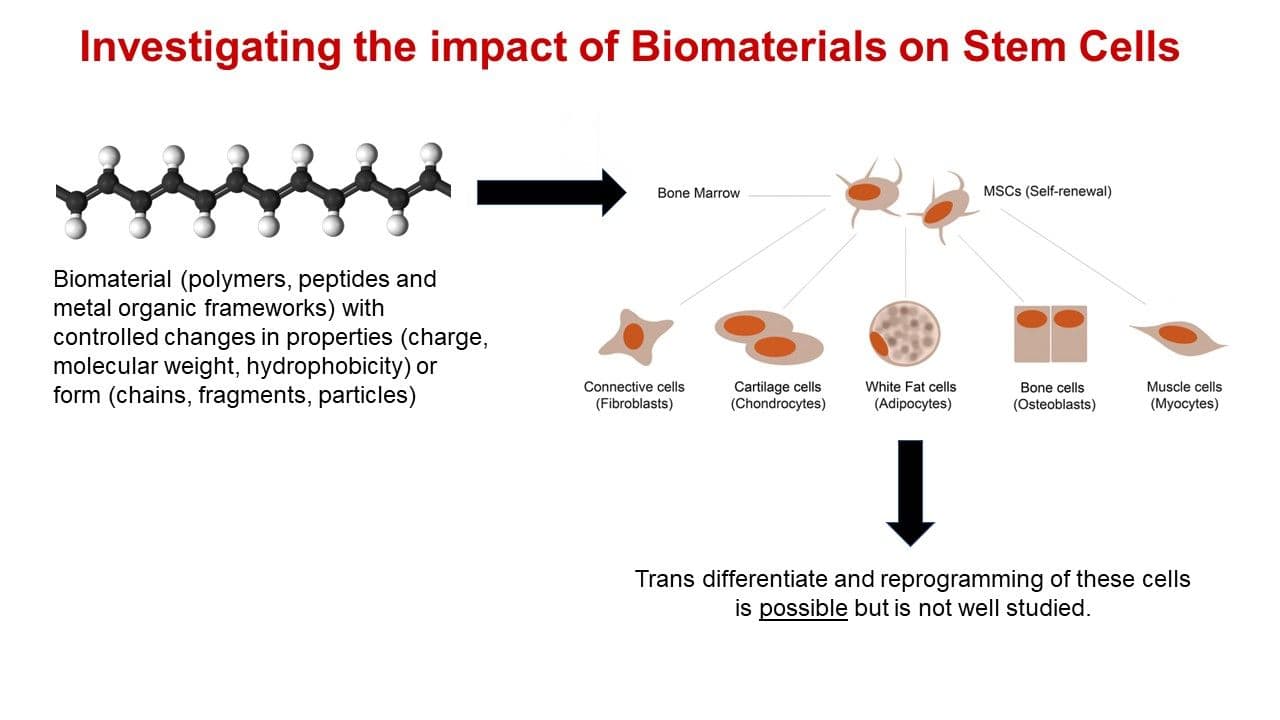
Stem cells possess remarkable potential for tissue repair and regeneration; however, their therapeutic effectiveness is often limited by poor survival, uncontrolled differentiation, and inadequate interaction with the surrounding biological environment after transplantation. A major challenge in regenerative medicine is understanding how engineered biomaterials influence stem cell behavior and how these interactions can be leveraged to improve tissue healing and therapeutic outcomes.
The Kaur Lab develops and evaluates advanced biomaterial platforms designed to regulate stem cell function and fate. By combining principles of biomaterials science, cell biology, and tissue engineering, we investigate how the physical, chemical, and biological properties of biomaterials influence stem cell viability, proliferation, differentiation, and immunomodulatory activity. Our research utilizes innovative biomaterial scaffolds, extracellular vesicle technologies, and cell-material interaction studies to identify design strategies that enhance stem cell performance in therapeutic applications.
This research seeks to advance the development of next-generation regenerative therapies for a broad range of diseases and tissue injuries. By improving our understanding of biomaterial-stem cell interactions, we aim to create more effective and predictable treatment strategies that enhance tissue repair, reduce inflammation, and promote long-term functional recovery. The knowledge generated through this work has significant translational potential for applications in regenerative medicine, immune-mediated disorders, and personalized healthcare.
2. Extracellular Vesicle Engineering for Autoimmune Disease Therapy
Autoimmune diseases occur when the immune system mistakenly attacks healthy tissues, resulting in chronic inflammation, progressive tissue damage, and impaired organ function. Current therapeutic approaches primarily rely on broad immunosuppressive agents that can increase susceptibility to infections, cause systemic side effects, and often fail to provide durable disease remission. There is a critical need for targeted therapeutic strategies that can selectively regulate aberrant immune responses while preserving normal immune function and maintaining long-term immune homeostasis.
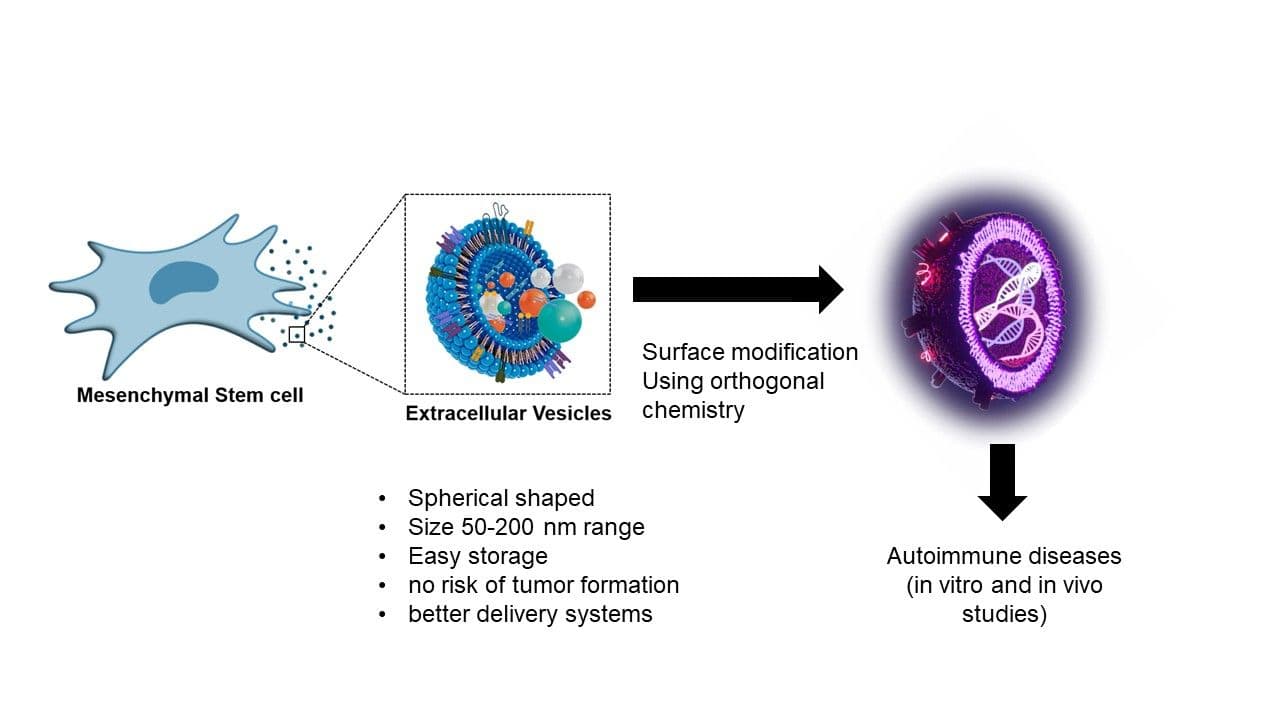
The Kaur Lab develops chemically engineered extracellular vesicles (EVs) as next-generation immunomodulatory therapeutics for autoimmune diseases. Extracellular vesicles are naturally occurring nanoscale particles that mediate intercellular communication through the transfer of proteins, lipids, and nucleic acids. By applying chemical engineering strategies, we enhance the targeting, stability, cargo delivery, and therapeutic functionality of EVs to improve their ability to regulate immune cell behavior.
Our research integrates extracellular vesicle engineering, biomaterials science, immunology, and stem cell biology to design EV-based platforms capable of delivering precise molecular signals to specific immune populations. These engineered vesicles are evaluated for their ability to suppress pathological inflammation, promote immune tolerance, restore immune balance, and support tissue repair in autoimmune disease models.
This research aims to establish a new generation of cell-free immunotherapies that offer greater precision, safety, and efficacy than conventional immunosuppressive treatments. Chemically engineered extracellular vesicles have the potential to selectively modulate immune pathways, minimize off-target effects, and provide durable therapeutic benefits for patients suffering from autoimmune disorders.
The technologies developed through this work may lead to transformative therapies for diseases such as lupus, Sjögren's syndrome, autoimmune uveitis, type 1 diabetes, rheumatoid arthritis, and other chronic inflammatory conditions. This research seeks to bridge the gap between fundamental immunology and translational medicine by creating clinically viable extracellular vesicle-based therapeutics that improve patient outcomes and quality of life.
3. Extracellular Vesicle Biomarkers for Precision Diagnosis of Autoimmune Diseases
Autoimmune diseases are often difficult to diagnose in their early stages because clinical symptoms can be non-specific, variable, and may overlap with those of other inflammatory disorders. Delayed diagnosis frequently results in disease progression, irreversible tissue damage, and reduced treatment effectiveness. There is a critical need for sensitive and minimally invasive biomarkers that can detect disease onset, monitor progression, and guide therapeutic decision-making before significant clinical complications occur.
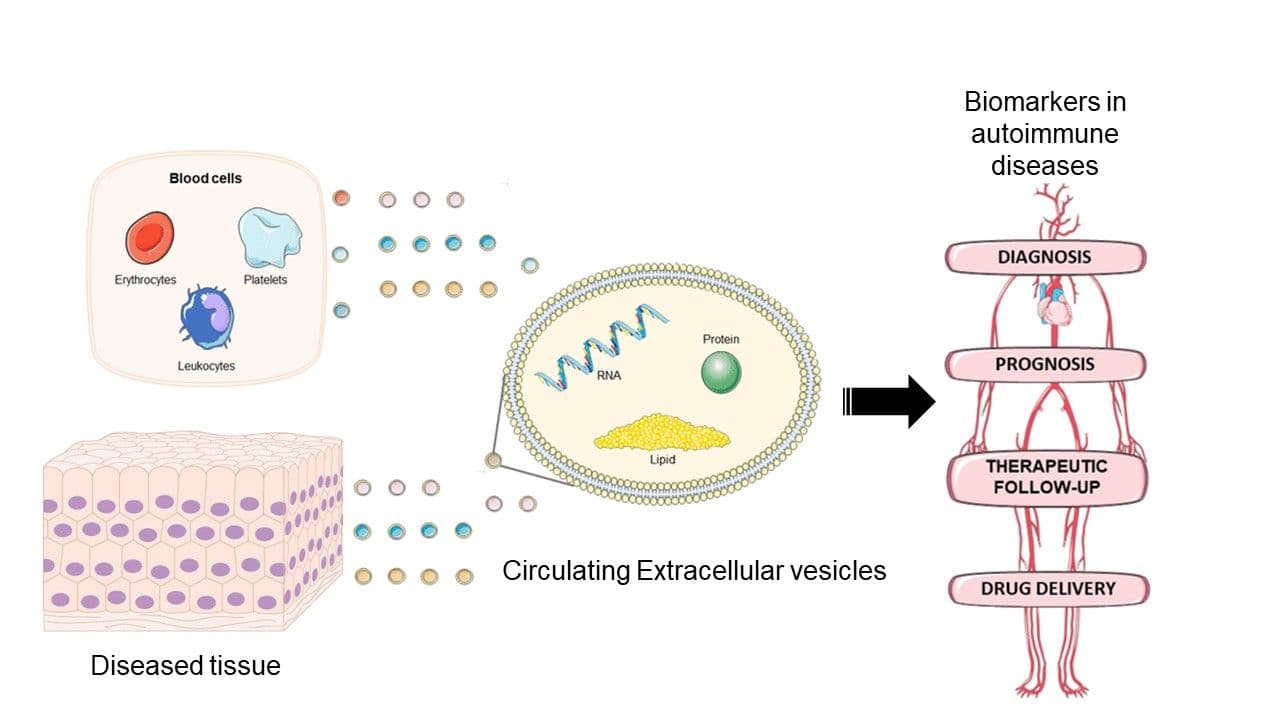
The Kaur Lab investigates the role of circulating extracellular vesicles (EVs) as novel biomarkers for the early detection and monitoring of autoimmune diseases. Extracellular vesicles are nanoscale particles released by cells into biological fluids such as blood, saliva, and urine, carrying molecular cargo that reflects the physiological and pathological state of their cells of origin. Our research combines extracellular vesicle isolation and characterization, molecular profiling, biomarker discovery, and immunological analyses to identify disease-specific EV signatures associated with autoimmune disorders. By analyzing EV-associated proteins, lipids, nucleic acids, and immune-regulatory molecules, we seek to uncover biomarkers that enable earlier diagnosis, improved disease stratification, and real-time monitoring of disease activity.
This research aims to establish extracellular vesicle-based liquid biopsies as a new generation of diagnostic tools for autoimmune diseases. Early and accurate detection could enable timely therapeutic intervention, improve patient outcomes, reduce disease-associated complications, and support personalized treatment strategies.
4. Advanced Drug Delivery Systems
Oral administration is the most convenient and patient-friendly route for drug delivery; however, many therapeutic agents, particularly biologics, peptides, proteins, and poorly soluble drugs, face significant challenges in the gastrointestinal (GI) tract. Harsh gastric conditions, enzymatic degradation, poor intestinal absorption, and limited bioavailability often reduce therapeutic effectiveness. There is a critical need for advanced delivery systems that can protect drug molecules during transit through the GI tract and enable efficient absorption at the target site.
The Kaur Lab designs and engineers innovative biomaterial-based drug delivery platforms to overcome biological barriers associated with oral administration. By integrating principles of biomaterials science, nanotechnology, pharmaceutical sciences, and bioengineering, we develop materials capable of protecting therapeutic cargo, improving drug stability, enhancing intestinal transport, and enabling controlled drug release. Our research focuses on the design of functional biomaterials, nanoparticles, polymer-based carriers, and bioresponsive delivery systems that can improve the oral bioavailability of therapeutics. We investigate the interactions between these engineered platforms and the gastrointestinal environment to optimize drug transport and therapeutic performance.
This research aims to advance the development of safer, more effective, and patient-friendly oral therapies. Improved oral delivery technologies have the potential to increase treatment adherence, reduce the need for injectable medications, and enhance therapeutic outcomes across a wide range of diseases.